College may be the best time for exploring and testing new ventures, because most college students have the cushion of not yet being in “the real world.” Many college students are lucky enough to have few obligations outside of classes and grades. Your risks, once you step out of those pearly college gates, will be much greater.
On that note, don’t be afraid of failure. While the “99 percent of startups fail” warning does hang over many new young entrepreneurs, it shouldn’t be a reason to avoid trying something. Work as hard as you can and don’t let fear get in the way. Life is short, and now is not the time to be perfect.
Should you encounter failure, remember that this is only the beginning. This past May, CNBC reported that it’s the hottest job market in years for the expected 1.9 million students who will graduate in 2016. But while the class of 2016 has better job prospects than those in any class since the Great Recession, competition is still tough. As many as 70 percent of new grads are still unsure how they fit into the workforce. It seems that while grads are emerging with impressive degrees, they fall short in knowing how to market themselves to potential employers.
That’s where you’ll have the upper hand: Your experience in building, marketing and promoting your company will only benefit you in the long run–even if it fails. In this competitive pool of new grads, it’s all about what you can do to stand out.
Galaxy S7 Edge vs. Google Pixel XL : design and display
The team at Gizmodo states: "The Google Pixel XL is too stupid and ugly to replace your iPhone." You don't see an analysis in that tone of voice every day, do you? Personally, I wasn't as offended by the design of Google Pixel XL as they were, though, for me, the Galaxy S7 edge is much more attractive.
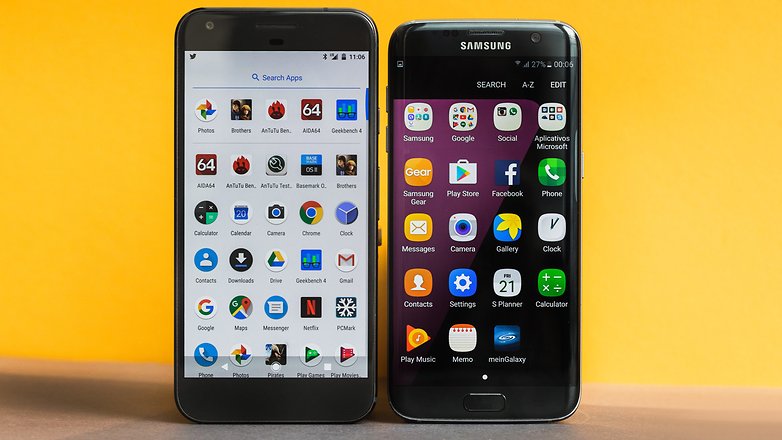
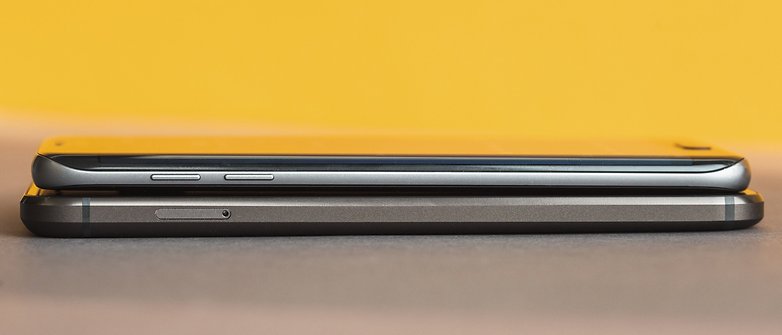
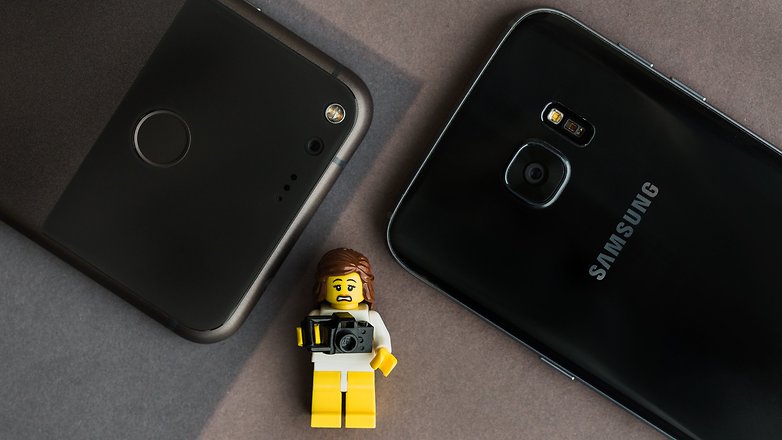
The Galaxy S7 edge is more elegant and sophisticated. It fits in the palm of your hand, even with a 5.5-inch screen. Do you know another smartphone that comes with a 5.5-inch screen? Exactly: the Google Pixel XL. Even though the difference in size between these two devices is quite small, it's evident when you look at them. Take a look:
Device
Dimensions
GALAXY S7 EDGE
150.9 x 72.6 x 7.7 mm
GOGLE PIXEL XL
154.7 x 75.7 x 8.6 mm
Both screens are basically the same quality, using AMOLED technology and QHD resolution. The difference, however, lies in the borders. Just like the name indicates, the borders on the Galaxy S7 edge are curved and the screens brightness is a bit better than the Pixel XL, which results in colors that are a bit more vivid.
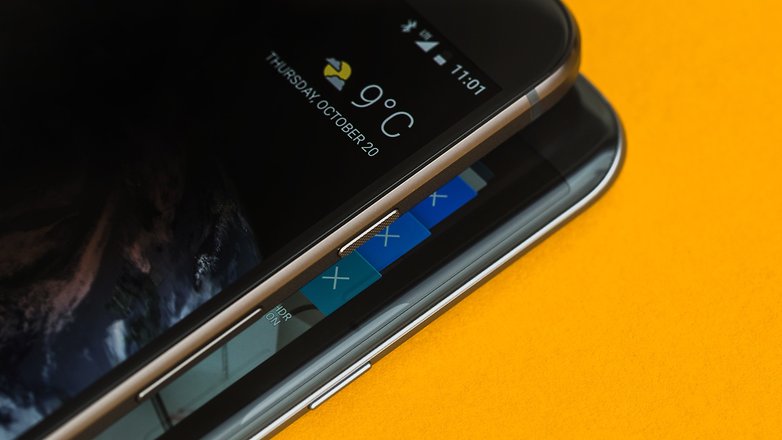
Regarding the fingerprint scanner, the fact that the Galaxy S7 Edge has a digital fingerprint sensor on the front makes it much more convenient to use, whether it’s on a table or in your hand. The biometric sensor for the Pixel XL, sadly, has two problems: it’s located on the back and at the top, making it a difficult device to use.
However, the advantage is in the use of gestures that the Google team included on the Pixel XL. This way, we can quickly see notifications without having to move our hands, just by sliding your finger over the biometric scanner, like we do when we want to activate the notifications bar in our smartphones.
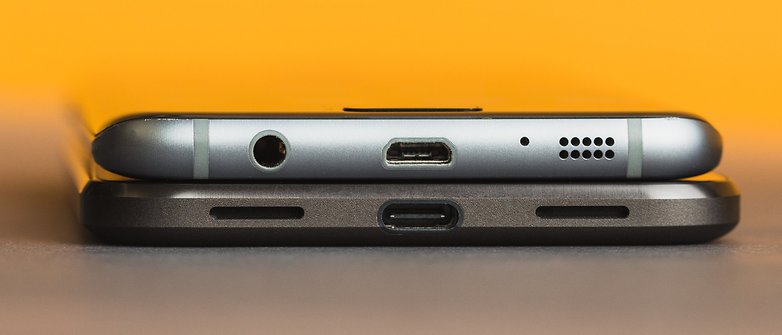
Another difference between the two designs is the fact that the Google Pixel XL has a USB Type-C port while the Galaxy S7 edge comes with a USB 2.0. More than just not being compatible with the standards of the future, transferring data is much slower on Samsung's flagship model. The Galaxy Note 7 was the first big smartphone to come with this option but this was before its explosive retirement from the market...
Lastly, despite preferring the way colors are seen and the brightness of the display on the Google Pixel XL, the design of the Galaxy S7 edge makes it a better made phone with a much better grip. If, after finishing this comparison, I'm forced to choose a device based solely on design and display the Galaxy S7 Edge would be my choice.
Galaxy S7 Edge vs. Google Pixel XL: performance and software
The Pixel XL features pure Android, manufactured directly by Google and it comes with a launcher exclusive to its system - the famous Pixel Launcher - the same way TouchWiz offers exclusive features to Samsung's smartphones. The difference is in the number of exclusive services Samsung offers its clients, of which there are quite a lot - although they're not always useful.
CR
Camila Rinaldi
“Pure Android" is definitely not my cup of tea
What do you think?
I agree
I disagree
What I like about Google's user interface is the fact that the search engine giant is so "self-centered" that it didn't partner with either Facebook or Microsoft. Consequently, the Pixel XL offers its users the option to download Facebook, Instagram, OneDrive, and OneNote, among others. Still, the software on Google's camera is extremely limited, which makes the services offered by Apple much better.
While I was writing a review about the Google Pixel XL, I realized that stock Android is definitely not my cup of tea. I'm just saying, if the resources offered by the Android Google Pixel XL were the same as those offered by the Galaxy S7 edge, the contrary will never happen, it would make a large portion of their users very happy. If you're one of those users, the Pixel XL, just like any Nexus or Moto series, would be the device for you. However, if what you want is more substance, go for a Samsung, Sony, Xiaomi, etc.
The performance of the Galaxy S7 Edge and the Google Pixel XL isn't so great that it makes me lean one way or another and, if you don't believe me, you can easily look up comparisons between them. Now, if we were talking about the iPhone 7 Plus, there would be a difference, which puts on a performance clinic when compared to the Google Pixel XL and the Galaxy S7 edge.
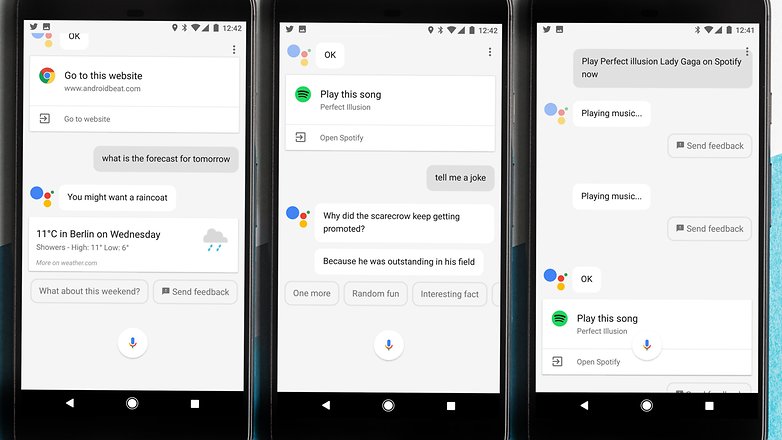
Google promised us a great personal assistant, Google Assistant. However, the only adjective that comes to mind to define this feature is the same one that Gizmodo used: dumb. This feature can (in this phase of development) be easily substituted by Google Now on Tap and the Google App. There are very few features that Assistant can learn quickly and then perform. Sadly, Google did the best thing they know how: more Beta versions.
The important thing when comparing the performance and software of these two devices is the fact that, with practically the same starting power (Exynoss 8890 vs. Snapdragon 821) the amount of bloatware can make the difference. However, everything depends on the number of Apps that you use.
With respect to battery life, both the smartphones from Samsung and Google have practically the same performance. However, the Galaxy S7 Edge is in the lead, coming with more advanced ways to save energy such as their wireless charging feature.
As I've already said, I'm not a fan of pure Android. I prefer exclusive services - and useful ones. Therefore, in light of this comparison, I would lean towards the Galaxy S7 Edge, mainly due to the fact that I can use a personalized ROM when I get tired of TouchWiz. If you don't feel the same way, you could always choose a Moto series smartphone. Any device from them is much more suited to use with pure Android.
Galaxy S7 Edge vs. Google Pixel XL: camera
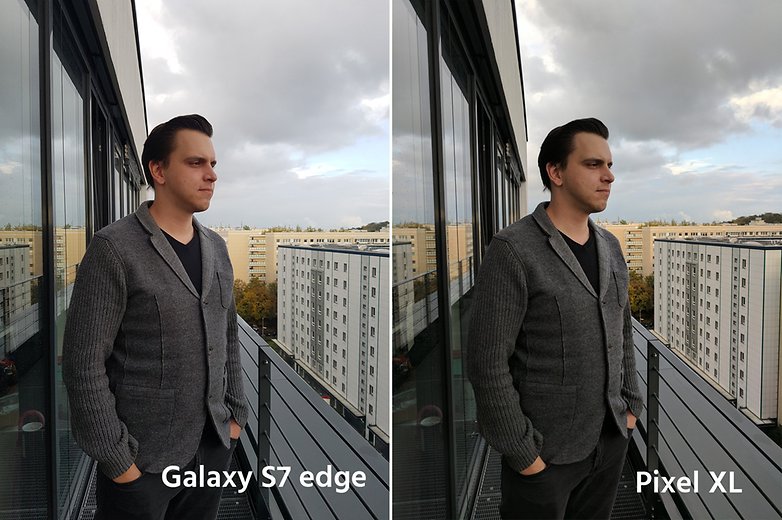
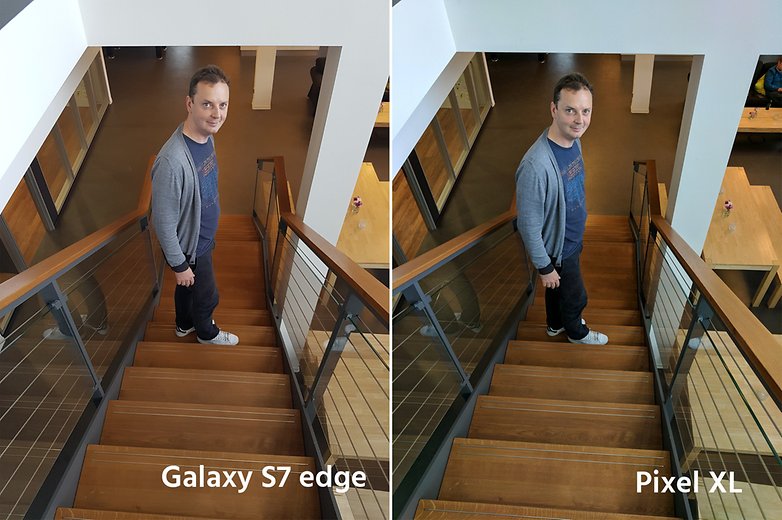
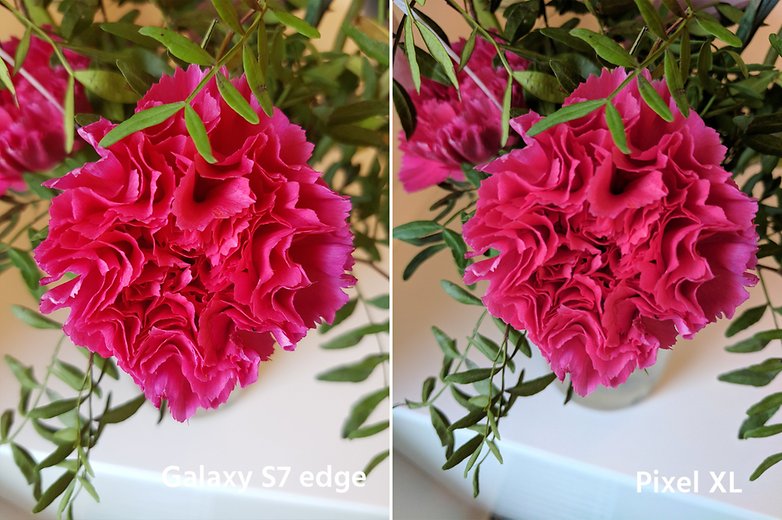
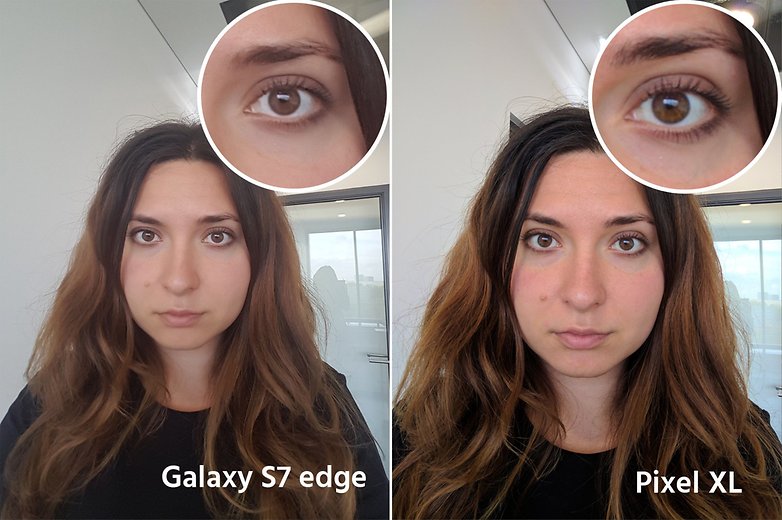
Camera performance is excellent on both devices. While the Samsung comes with an optical image stabilizer, compatible with RAW, - with a wide dynamic range of colors and light balance - and features like selective focus, the Google Pixel comes with laser focus and an impressive contrast quality.
The main camera on the Galaxy S7 edge is 12 MP and an image sensor of 1/2.5 inches. Pixels are 1.4 mm and have a greater sensitivity to solar light. It has an aperture of f/1.7 and both devices come with Dual Pixel technology.
On the other hand, the main camera on the Google Pixel XL is 12.3 MP, with 1.55 mm pixels and an aperture of f/2.0. The automatic focus comes with phase detection (PDAF) as well as laser (LDAF). The laser sensor is located in two holes to the side of the camera's sensor, just like on the Nexus 5X, though here they're separated.
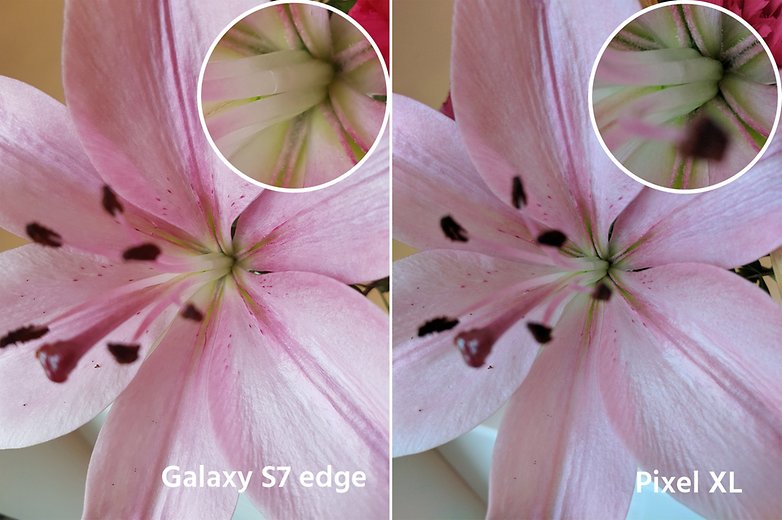
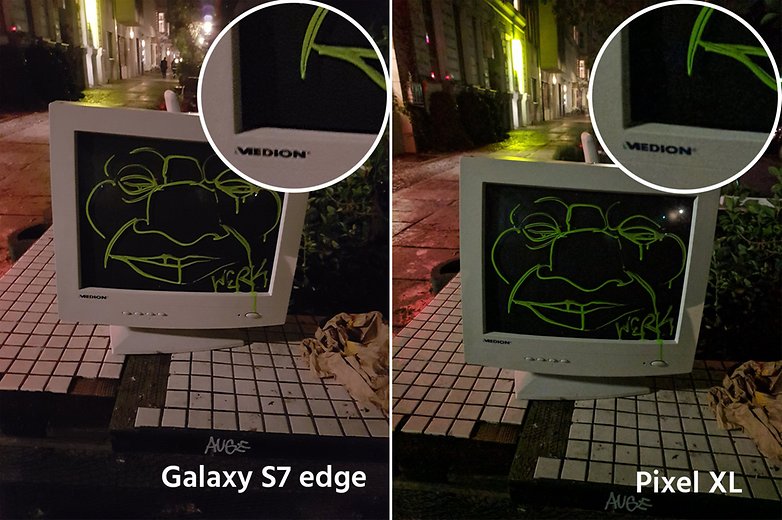
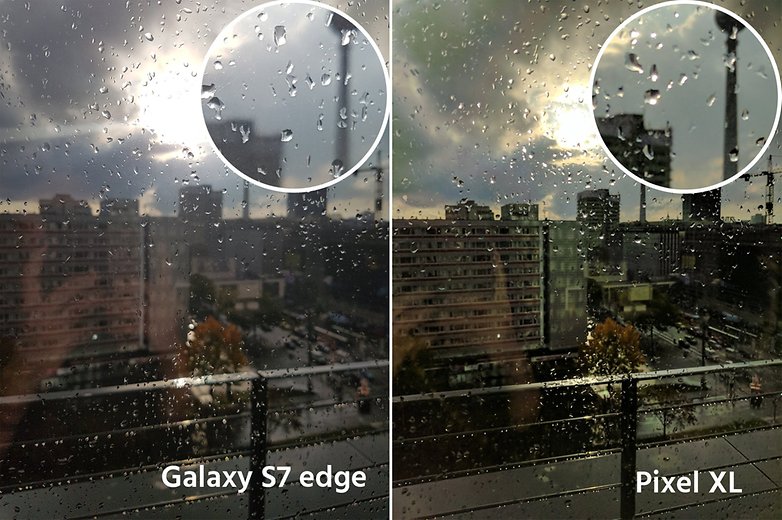
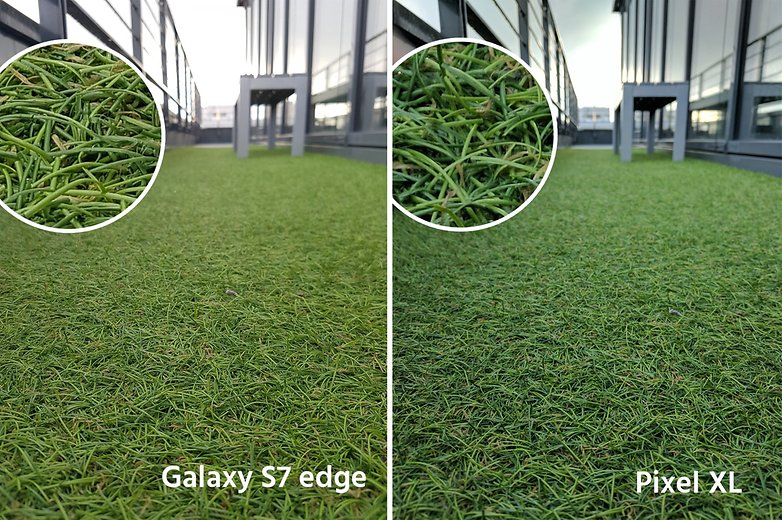
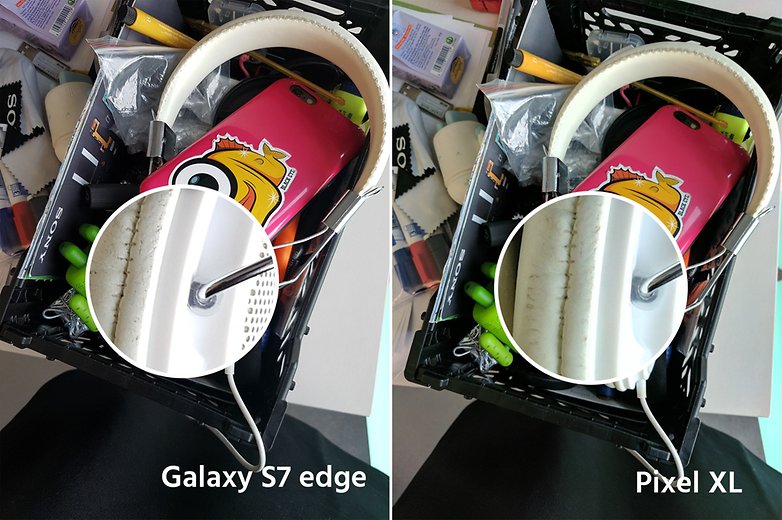
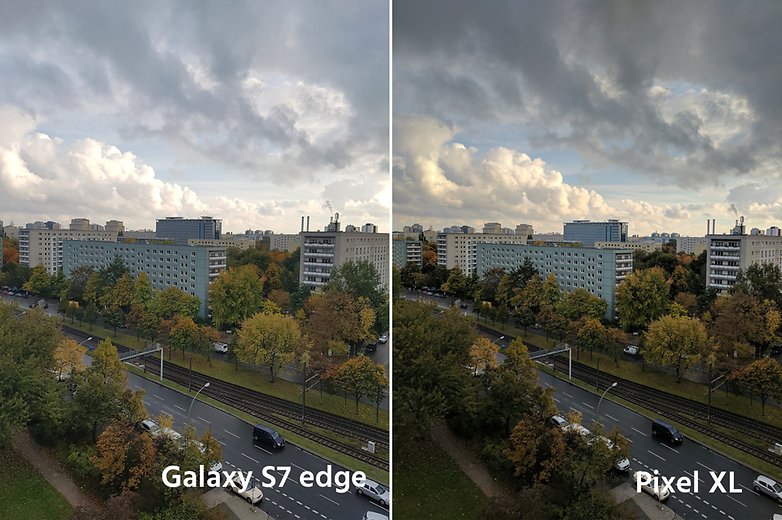
Below, you can see, in detail, some images made for this comparison. In the end, while the Galaxy S7 edge has excellent light capture, the contrast that the lens on the Pixel XL offers is one of the best I've ever seen on a smartphone.
The Galaxy S7 Edge can be found at the official Samsung store for $769.99.
The Google Pixel XL can be bought through the Google store in select markets. The price varies depending on the amount of storage. The 32 GB version costs $769, the 128 GB version $869.
Galaxy S7 Edge vs Google Pixel XL: tech specs
Google Pixel XL
Samsung Galaxy S7 Edge
Model:
Sorry, not yet available!
G935F
Manufacturer:
Google
Samsung
Dimensions:
154.7 x 75.7 x 8.6 mm
150.9 x 72.6 x 7.7 mm
Weight:
168 g
157 g
Battery size:
3450 mAh
3600 mAh
Screen size:
5.5 in
5.5 in
Display technology:
AMOLED
AMOLED
Screen:
2560 x 1440 pixels (534 ppi)
2560 x 1440 pixels (534 ppi)
Front camera:
8 megapixels
5 megapixels
Rear camera:
12.3 megapixels
12 megapixels
Flashlight:
Dual-LED
LED
Android version:
7.1 - Nougat
6.0 - Marshmallow
User interface:
Stock Android
TouchWiz
RAM:
4 GB
4 GB
Internal storage:
32 GB
128 GB
32 GB
64 GB
Removable storage:
Sorry, not yet available!
microSD
Chipset:
Qualcomm Snapdragon 821
Samsung Exynos 8890
Number of cores:
4
8
Max. clock speed:
2.15 GHz
2.3 GHz
Connectivity:
HSPA, LTE, NFC, Bluetooth 4.2
HSPA, LTE, NFC, Bluetooth 4.2
Galaxy S7 Edge vs. Google Pixel XL: which to buy?
The fact that the Google Pixel XL isn't available in a majority of countries is a very negative factor, especially if they add to the suggested price in the US. The Galaxy S7 Edge was launched at the end of February of this year, so the real competition for the Google Pixel XL should be the Galaxy Note 7, but we know how that story ends.
The Galaxy S7 Edge is globally available and has a range of unique features when compared to the Google Pixel XL, like taking photos in RAW format and having additional camera options. Plus, it comes with a curved border, which will delight gamers, photo aficionados and movie watchers alike.
On the other side, the Google Pixel XL is an excellent example of a smartphone running on pure Android or, as some users like to say, Android "closer to its core". Yet, it's more expensive and for many countries can only be imported.
If you have any doubts with respect to which device to choose, analyze the pros and cons of each. When I did at the time, the Galaxy S7 Edge continues to be my definite choice.
Many companies across every industry are now relying on machines and networks to learn quickly. That means developers who can program systems to learn faster are in high demand. Make yourself more marketable and learn this valuable skill right now with this course bundle.
This deep learning and AI course bundle includes the basics as well as the some advanced topics. Each class is easy-to-follow and includes practical, hands-on training. In no time you'll be proficient in complicated topics like facial expression recognition and adaptive learning rate techniques like AdaGrad and RMSprop.
Boost your career and get this course on your resume and LinkedIn profile. Pick it up and get started right now; it only costs $39 – that's 91 percent off the regular price of $480. But hurry over, this deep discount ends soon.
The Russian website mobiltelefon.ru has focused its attention on two entries in a database for encryption technologies of the Eurasian Economic Commission. Also mentioned there are the products that use them.
Sony G3112 and G3121: release Information
Not much is known yet about the two Sony Xperia smartphones with the model numbers G3112 and G3121, largely because the entry discloses nothing more than this information and the company name – Sony. Xperiablog.net writes that the letter G is likely to refer to the 2017 generation, because Sony used an E as a character identifier in 2015, while in 2016 it was an F.
The Mobile World Congress (MWC) in Barcelona, which is due to take place at the end of February 2017, is the likely candidate for a release date. Sony usually presents its new smartphones there. There is no information on technical data or other features either. Therefore, it is also not known whether the model numbers belong to mid-range or high-end smartphones. This information will certainly come out gradually over the coming weeks and months.
Are you excited about what Sony will present at the MWC? Which new features, in your opinion, should Sony introduce? Let us know in the comments below!
October 10: Amid the production halt of the Galaxy Note 7, a possible launch date for the Galaxy S8 was leaked by serial leakster Ricciolo. In a tweet, he claimed the unveiling will be February 26 at 7pm CET in Barcelona. This came from an 'Unpacked' photo in the tweet. You can view it below.
We'll let you know as soon as we have more information on a launch date for the Samsung Galaxy S8.
September 14: Speculation has emerged that the Galaxy S8 release could be fast-tracked as a way for Samsung to offset the fallout from the Note 7. With the new Note's exploding battery issue leading to a recall that has cost the company millions of dollars, along with the damage the company has taken to its brand image, analysts from KB Investment & Securities speculate that Samsung could release the S8 early to try and repair some of the damage that has been caused, along with injecting a revenue boost that might offset the losses and appease investors.
While this sounds like a good theory, each year Samsung presents its latest Galaxy S line at Mobile World Congress. The Galaxy S devices are essentially the most important devices launched at a large and widely publicized tech conference. It would be an unusual move for Samsung to forego using MWC as a launchpad, but is still entirely possible.
The price for the Samsung Galaxy S7 was up there with the priciest phones around. It currently sits around $579 but started out in the $700 range for most vendors.
Since the Galaxy S7 improved upon the specs of the S6 and the price reflected this we could expect to see a similar price progression to the S8. This would be the natural course and the 2017 Samsung flagship might come with a price tag that breaks the $800 mark. While this would be expensive Samsung has many devices to choose from and you don't have to go with its flagship.
The Galaxy S7 had more or less standard specs for flagship devices released in early 2016. The US version came with a Qualcomm Snapdragon 820 (Exynos 8890 in Europe). This top-of-the-range processor was backed with 4GB RAM and the device performed exceedingly well in our benchmark testing.
October 26: According to information posted on Chinese social network Weibo, the Galaxy S8 will reportedly deliver a 5.5-inch 4K display geared for VR and will come with a whopping 6 GB of RAM. While that's good news, other rumors say that Samsung has no plans to bring the launch of the device forward.
October 20: The Note 7 battery doomed the phablet and put the South Korean smartphone giant in jeopardy. We can expect that Samsung will pull out all the stops to ensure that the Galaxy S8 goes off without a hitch. So it came as no surprise to us that the company could be looking externally for help with the S8 battery.
The Korea Herald reported that a Samsung executive said that the company is "looking at diverse suppliers, including LG Chem" for help with the Galaxy S8 battery. This has not been confirmed by either company but there are sources who say the deal is already signed between the two. This would not be the first time that Samsung looked to LG for partnership.
October 5: The S8 could bring smartphone performance to even greater heights with its two chipsets. Half of the Galaxy S8 devices could be packing a Snapdragon 830 processor while the others might come with the Exynos 8895 that was previously rumored. This comes as no surprise as producing devices with different chipsets is nothing new for the Korean smartphone giant.
This information comes to us via etnews in Korea in a story that also speculates that the processor could be made with a new Samsung 10nm process. If the Exynos 8895 is made with the same 10nm process then the differences between the two might be minimal – just like last year.
September 26:The Exynos 8895 processor might be used in some of the Galaxy S8 smartphones. Sammobile reports that an executive from Samsung was arrested by South Korean police for attempting to steal company information about the S8's newest chipset.
The arrest report might have revealed the 10-core processor Samsung will be using in its upcoming flagship next year. The chipset makes use of ARM's newest Mali-G71 GPU, which is rumored to be 1.8 times faster than the Mali-T880 MP12 GPU found in the Galaxy S7.
September 15: The S8 might come with an Exynos chipset that is said to be capable of up to 4 GHz speeds. The rumored Exynos 8895 would provide an estimated 30 percent performance improvement on the Exynos 8890 found in the Galaxy S7 (in some regions) if the claims are accurate.
Taking Notes
While the S7 made improvements upon its design from its predecessor, it had similar specs to the Galaxy Note 5 released six months before then. And this follows previous releases of the Galaxy Note series. So the previous Samsung phablet generation usually gives us a preview of the next Galaxy flagship specs.
The Galaxy Note 7 has been announced and we've already had a chance to test it. Suffice it to say, we're impressed. One thing that's very clear is that the Note 7 more closely shares design DNA with the Galaxy S series, with the convergence of edges – whether large or small – across all Samsung flagships.
Google announced at its I/O developers' conference earlier this year that Android Nougat will have VR support baked into the OS. This platform is called Daydream, and for devices to support it, they have to meet a certain specs sheet defined by Google.
While these specs have not yet been made public, several devices have already been confirmed or even released that are certified Daydream-ready. Among these devices is the Asus Zenfone 3 Deluxe, which has a Full HD display, suggesting this to be the minimum requirement on the display front.
However, the latest Galaxy S8 rumor, coming via phoneArena.com, suggests that Samsung wishes to future-proof the device by equipping it with a 4K display. Indeed, the rumored codename for the Galaxy S8 project – Project Dream – points flirtatiously towards Daydream, so a focus on VR does not seem at all unlikely.
Samsung also recently showcased a 5.5-inch 4K display, suggesting serious headway is being made towards placing such a display inside the next generation of the Galaxy S series.
Samsung Galaxy S8 design
November 1: The Samsung Galaxy S8 could come with an OLED display. The South Korean smartphone giant is looking to stem the outcry over its Note 7 debacle with a new flagship that awes. Including a bezel-less, edge-to-edge OLED screen would certainly achieve that end.
The Korean Herald spoke to a Samsung Display researcher who said “Samsung Display would roll out a full-screen display whose display area ratio [...] reaches more than 90 percent next year”. The Samsung employee declined to officially confirm this full-screen adoption but there are reports that Apple is working on implementing this technology into its iPhone 8.
October 12:
We've already seen rumors suggesting the Galaxy S8 could come in two variants, which sounds believable considering the S7 came as two devices with different processors. But now we have leaks showing a Galaxy S8 with different displays and sizes as well as processors.
The perpetual Chinese leaking forum, Wiebo, reported that there will be two different sizes for the variants. One could come with a 5.1-inch curved Super AMOLED display and the other a 5.5-inch 4K display. Also suggested in the leak is that Samsung could replace S Voice with Viv AI in the newest S-series device.
A report suggests that all future Galaxy S phones could come with curved edges, with flat slate phones like the Galaxy S7 potentially being relegated to the tech trash heap. The Korea Herald wrote that Samsung planned to consolidate its flagship lineup, with next year's phones being honed down to curve-only displays. This could pave the way for a single Galaxy S8 device, the way the Galaxy S line was produced until the Galaxy S5.
If this claim proves to be correct, it would mean a significant change for one of the world's most popular smartphone families. A change like this would signify that curved-edge displays had become the more popular choice for Samsung customers.
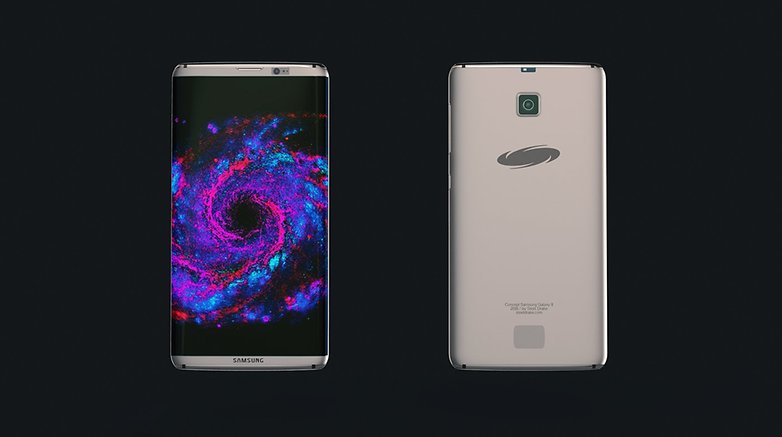
We hope to see big changes in the Galaxy S8 and we're not the only ones. The designer Steel Drake threw his hat into the ring for designing the new flagship device and we hope to see some of these in 2017. We've seen some interesting design concepts for the S8 already but we desperately want these.
As you can see, the front would have the Samsung logo at the bottom along with the front camera at the top. Missing is the physical home button and fingerprint reader. This makes the screen take up far more of the front of the device and a welcome look for those wanting a better screen experience.
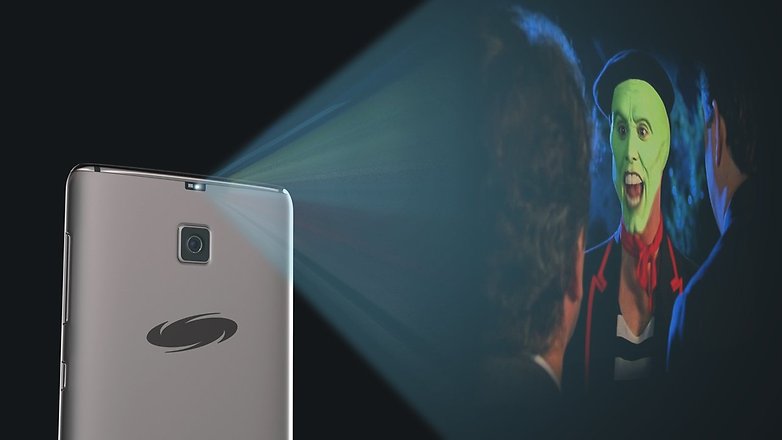
To us, the back of the device in the design renders are equally interesting. The back has a brushed steel look. This would be a complete change from the Gorilla Glass back on the Galaxy S7. At the top of the device Steel Drake also included a projector, which is interesting but probably not practical for a smartphone as it could be too taxing on the battery.
So far, speculations about the features of the Galaxy S8 have been futuristic. Of course, the Galaxy S7 had some cool features like waterproofing. The Samsung S7 Active took its durability a step further. We hope to see the 'shatter-resistant' display on the Active in the Galaxy S8.
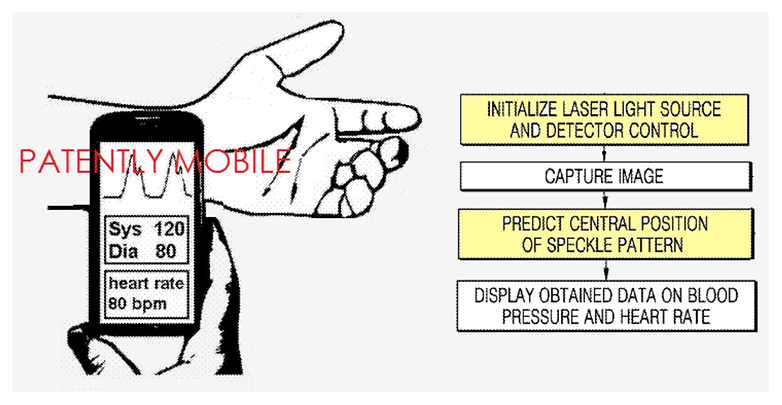
An interesting feature that could accompany the Galaxy S8 is a new laser dedicated to measuring the heartbeat through the skin. This came to us via SamMobile from a patent they spotted. The device would perceive the pulsation of the arteries and calculate your pulse. You can see the patent below.
The camera system of the Galaxy S8 could incorporate the iris scanner from the Note 7. This came to us from The Korea Herald, who reportedly spoke to a Samsung official on the condition of anonymity. This source claimed that "Samsung never uses the same camera for its flagship models [...] so there surely will be an improvement" for the S8 camera.
The official also claimed a dual-lens camera – technology we've seen in other high-end flagships this year – could accompany the S8. He didn't indicate whether there will be a different camera system for the rumored variants. We do hope that the S8 won't incorporate too many features from the Note 7.
Another rumor we have for the camera of the S8 is from PhotoRumors. They say the phone could come with a CMOS sensor 1 / 1.7-inch aperture that could come with a resolution between 18 to 24 MP.
What are you hoping to see from the Galaxy S8? Let us know in the comments.
The Galaxy S7 Edge comes with an Exynos 8890 processor. The CPU was developed by Samsung and comes with eight cores, four of them running at a maximum speed of 2.3 GHz and the other four at up to 1.6 GHz. According to Samsung, the CPU and GPU are 30 percent and 64 percent more potent, respectively, than the Galaxy S6.
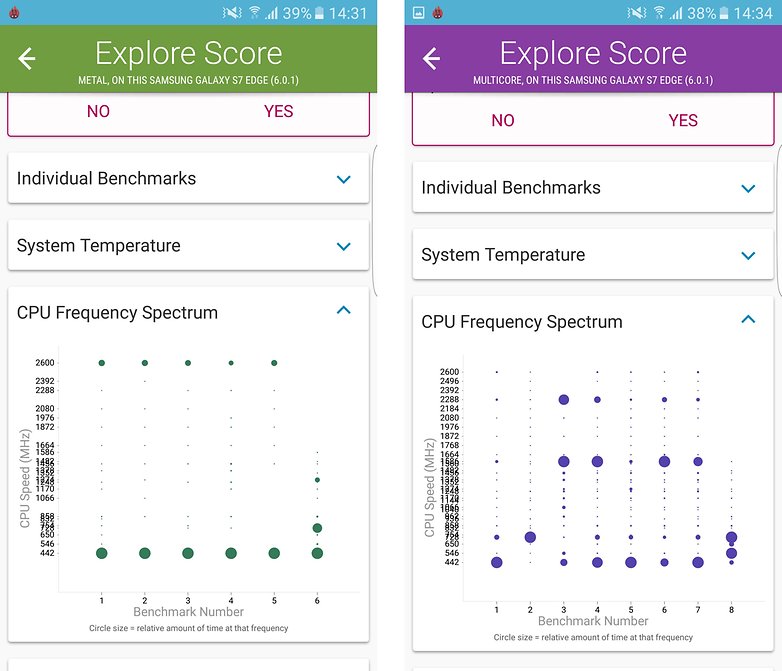
When we look at the results of benchmarking by Metal and Multicore’s Vellamo, we see that the first, which measures the maximum performance in an operation, the CPU frequency is much of the time overclocked or 2.6 GHz.
Thus, taking into account that the majority of Android applications use only two processor cores when running, the Galaxy S7 Edge delivers maximum performance the entire time.
This is, of course, only on paper. In real life, I had days when the software did not give me a headache or plain ran without crashes or delays. However, one day I downloaded four big games: Need for Speed No Limits, Asphalt 8, the Real Racing 3 and the Gods of Rome. During this time, I started to play one after another and I used almost 4 GB of data.
My colleague, Sophia Neun, installed the Need for Speed No Limits and Real Racing 3 on the Galaxy S7 Edge and she did not have the same problems. The problems I had with Need for Speed No Limits could also be related to my internet connection.
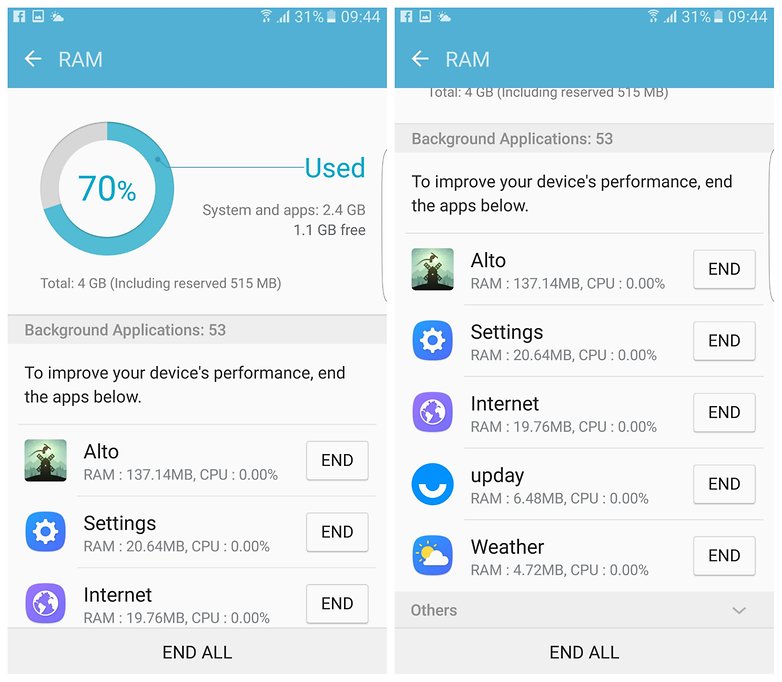
Moreover, the problem with background applications lock that has become a problem in the Galaxy S6 Edge Plus is not present in the S7 Edge. I had more than 50 applications running in the background with no system delays.
Below, you can see a table with the results of different benchmarks from the Galaxy S7 Edge:
Vellamo - metal
Vellamo - multicore
AnTuTu
Geekbench 3 - single core
Geekbench 3 - multicore
v3.2.3
v3.2.3
v6.0.4
v3.3.2
v3.3.2
2.163 points
3.424 points
131.202 points
1.883 points
6.173 points
The device I’m testing has 32 GB of internal memory and 4 GB of RAM. In it, I’m using a Samsung 120 GB SD card. The fact that the manufacturer offered an expandable memory option is great for storing photos and other media. But don’t get confused, you cannot use the microSD as internal memory.
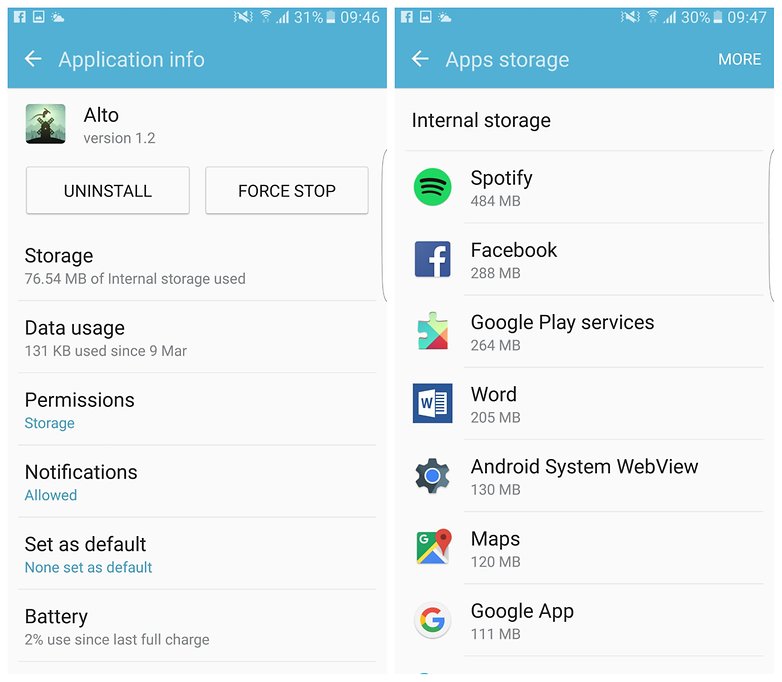
Looking at the examples above and below, you see that even after moving a 1.22 GB game in the device memory to the external memory, the external storage is only occupied by 492 MB.
Also, when I search for applications in the device memory, Asphalt 8 is among them, in Settings > Storage > Device Memory > Used space > Applications.
Samsung in the United States told Arstechnica in February that it chose against Adoptable Storage, stating that " our users want a microSD card to transfer files between their phone and other devices (laptop, tablet, etc), especially the photos and videos they shoot with the camera."
In addition, the manufacturer claimed that misuse of this feature may cause the card to “be erased the first time it is inserted into the device."
You have to keep in mind that, though the Galaxy S7 Edge is running Android 6.0.1 Marshmallow, its microSD card functionality is the same as we had in the Galaxy S5: you can’t just add a 32 GB card to the 32 GB S7 Edge to create a 64 GB device.
Many manufacturers have filed patents for foldable screens but the system that seems to me to be the most interesting and practical idea that has been adapted to the market, is the project that Lenovo are working on: a device that you can use like a mobile phone or that you can wrap around your wrist, turning it into a smartwatch. If it is well developed, this technology could provide, in the long run, the thinnest device that is easily transported and that has as many esthetic advantages as possible.
Artificial intelligence at the heart of it all
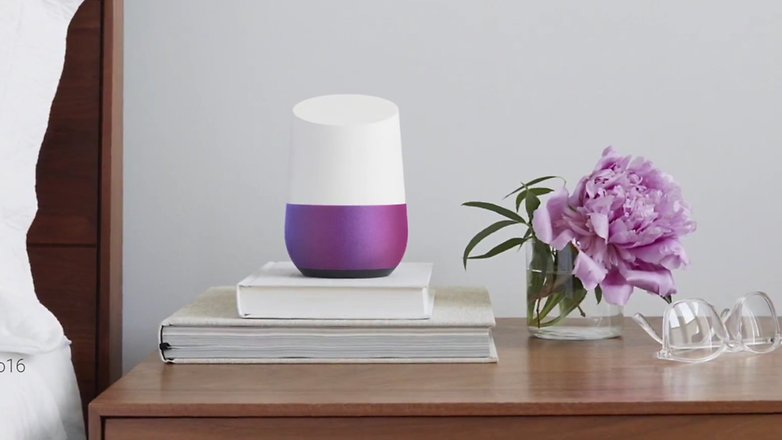
I have a mixed opinion of artificial intelligence, perhaps I am influenced too much by the 2001 film ‘Space Odyssey’ and its notorious CARL 500 computer. There’s no doubt that Artificial Intelligence will play a role in our daily lives and in managing our devices that organize our routines. Google is heading towards this perspective with its Assistant which, as well as carrying out these functions, will be able to satisfy your curiosity and perhaps even satisfy your needs: ordering food, buying plane tickets, etc.
Phones will likely always have different interfaces depending on the manufacturer but I think that they will also have different types of artificial intelligence. This will be the only thing that we will need in the end as it will be able to direct you towards functions that could be useful to you as well as information and apps. Of course, it’s ‘easy’ for Google as it has potentially the most used search engine in the world, but the competition will probably have more difficulties in this area.
To sum up, I imagine a form of artificial intelligence that centralizes everything that you could possibly do on a smartphone and make it all accessible by voice control.
Simplified smartphone control
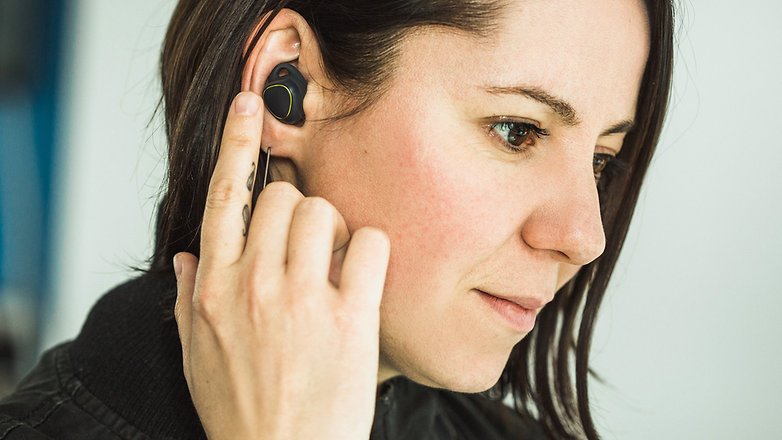
I understand that I have taken a big step in the direction of science fiction with a futuristic perspective that Jules Verne himself wouldn’t have dared venture (I’ll point out that I don’t consider myself to be an excellent writer or visionary like this gentleman!). You’re perhaps not familiar with the brain-computer interface (BCI). It’s a technology that aims to associate an individual’s thoughts with practical actions. We imagine that in the (very?) long term, it will be possible to control your smartphone through thoughts by wearing a small ear piece close to your head.
Controlling your smartphone with your brain would be amazingly practical but also quite worrying. On one hand, we don’t really know the effects of these signals on our health and, although the market tends to popularize them (wireless headphones etc.), we don’t know if they can cause problems or not. On the other hand, becoming physically inactive even in small efforts like these could make us all like the animated characters in Wall-E, a catastrophic scenario that I wouldn’t wish on anyone.
To conclude, I imagine that we will probably have a foldable device that is easily transported and that can be used simply, for example by a touch or neural interface (a touch interfaces are still indispensable). From the phone, you can access information of interest via a search system, you can access various applications, control your home electrics or any other object connected to the device as well as many other things.
Slight downside
I am keen to point out that this isn’t really what I want to see but rather what seems to be the logical next-step scenario. We constantly seek to facilitate our actions, which is one of technology’s definitions. Smartphones are no exception to the rule as they aim to carry out all actions from the same device (including managing lighting at home). Google is going in this direction (which perhaps isn’t the best thing) with its Google Assistant, it’s possible that others will follow in its footsteps.
Have we gone too far? We know from the past that freedom of action and good intentions are not enough to achieve results, the Oedipus myth proves that. Even by going ahead with it, these technologies (which remain closely linked to the economy) will not only have positive effects, so be careful.